History of the Gardens
Saling Hall was historically — from the 1700s backwards — a much larger estate, comprising hundreds of acres of land around Great Saling and across towards Stebbing to the west.
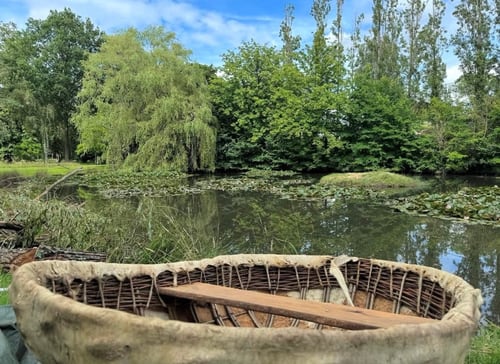
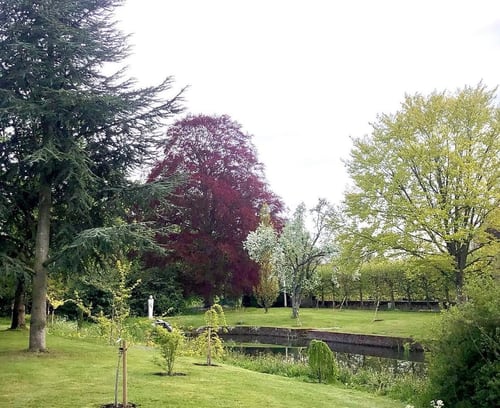
The gardens themselves at this point in time were relatively modest in size: a small park to the south adjoining the village; a fashionable canal formed from the historic moat of the earlier dwelling on the site; the walled garden of 1698 directly to the west; and an orchard and meadow to the north. The garden area itself was therefore around five acres or less at this time, while there was a large field to the north referred to as "Saffron Shot", likely due to the crocuses grown for saffron.
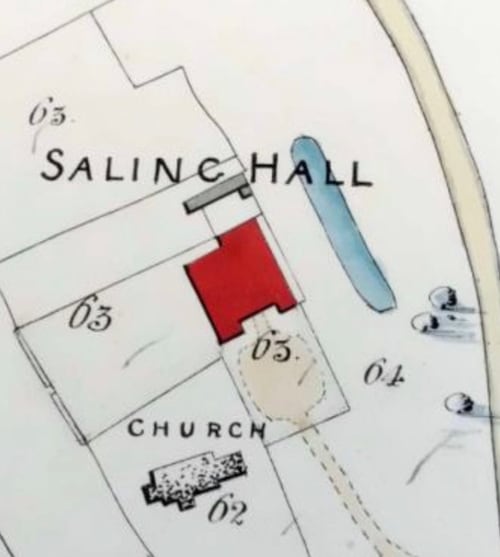
When Saling Grove was built for John Yeldham in the late 1700s, he also purchased Saling Hall and the accompanying Saling Hall Farm in 1790. By the time Bartlett Goodrich acquired Saling Grove, Saling Hall and the Farm in 1796, the much greater quantity of land accompanying Saling Hall was allocated to Saling Grove, leaving the former with an overall land area much more akin to the twelve acres it has today.
At this point the South Park of the house was formed, likely with landscaping input, such that there was a small garden courtyard directly in front of the house's south elevation and then parkland beyond, with the large duckpond a key feature therein.
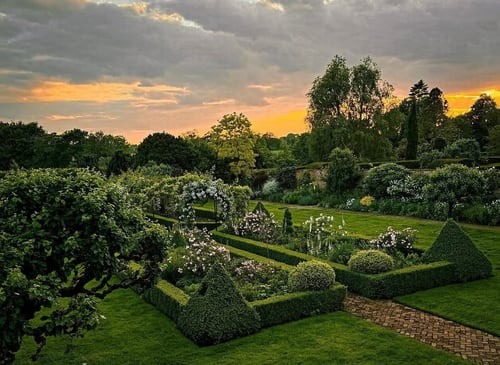
The moat and surrounding area will have remained unchanged, as did the walled garden — the latter being notable in its survival directly adjacent to the house, at a time when fashion dictated moving such gardens further away. The preservation of this feature, via the reduced status of the house during this period, is today a key benefit.
The gardens will have benefited little from the multiple-occupation period of the 1800s. It was really after 1935, when Lady Isabel Carlyle acquired the house, that the gardens began to develop. Lady Carlyle was clearly a keen gardener: she laid the walled garden out ornamentally rather than for food production, and began to stretch the boundaries of the garden beyond their historically tight band around the house.
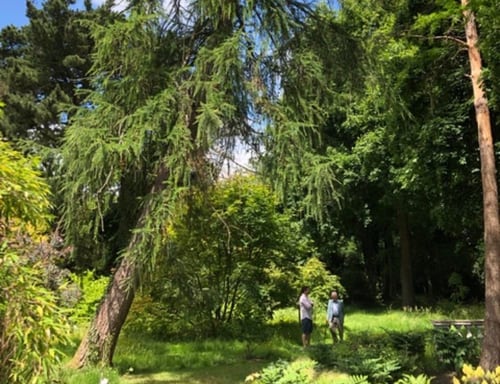
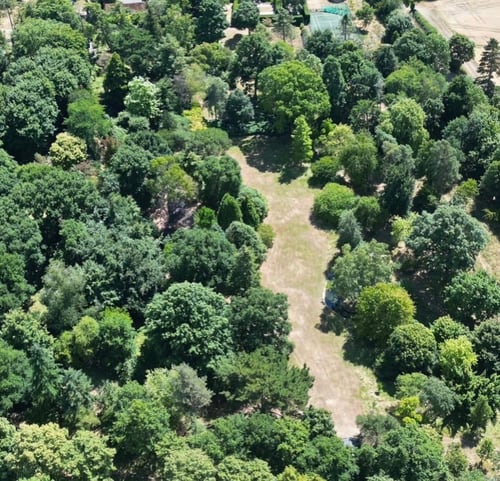
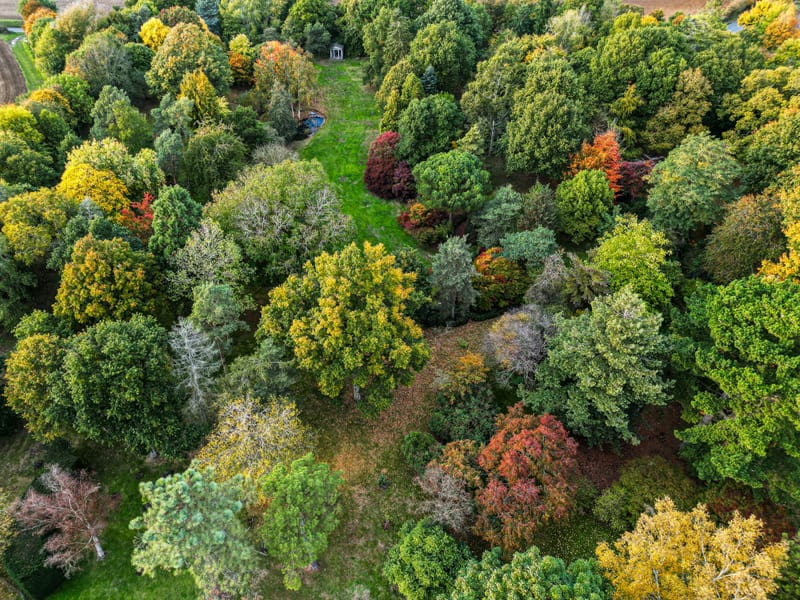
When Hugh and Judy Johnson bought Saling Hall in 1971, one of the attractions was the set of huge Elms at the house and in Great Saling more generally — the village had the country's largest trees. Following the devastating impact of Dutch Elm Disease a couple of years later, Hugh took the opportunity — also during a period of authoring seminal books on trees, alongside his similarly significant books on fine wine — to develop the large field to the north of the house, Saffron Shot, into an arboretum of rare trees, whilst also enhancing the existing gardens more generally.
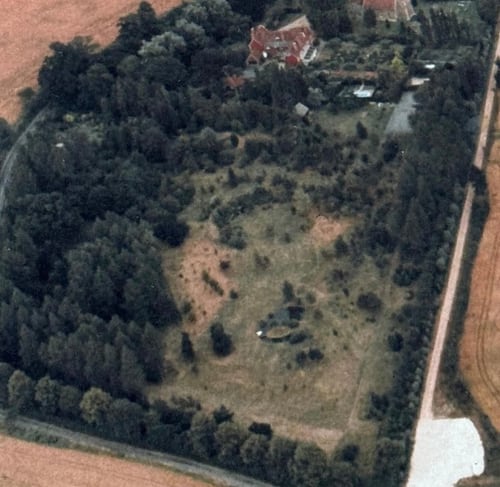
During this period, in 1987, Saling Hall's gardens were listed by Historic England as a Grade II Registered Park & Garden. There are only around 1,700 such listings in England. Curiously, Great Saling is the country's only village with two Registered Parks & Gardens, as Saling Grove also holds a Grade II listing due to its association with Humphry Repton.
In 2013 Hugh and Judy left Saling Hall, the gardens transformed aesthetically and also having gained significance as an important collection of rare trees.
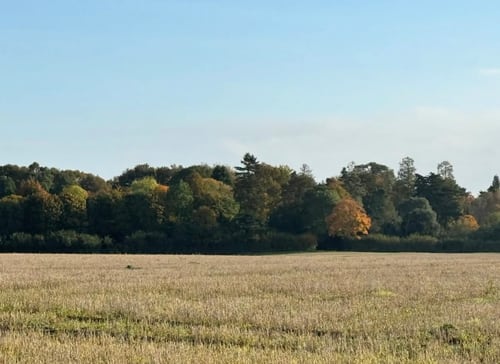
Following five years during which the house was empty, Matthew and Jennifer O'Connell took time to get to know the gardens before beginning a long-term enhancement scheme — including an ambitious programme of sourcing and planting rare trees. The Plant List today reflects a combination of Hugh and Judy's dedicated earlier development of the arboretum, and the more recent additions which continue on an ongoing basis, as shown by the Nursery Area section of the Plant List.
Since 2024, Matthew and Jennifer have been working closely with Jo Thompson — widely recognised as one of the country's leading landscape architects — on a long-term masterplan for the gardens, one very much aligned with Jo's romantic approach to planting and her sensitive hand when working with historic gardens.
The garden is fortunate to have the knowledgeable and talented Jack Dykes as its long-term Head Gardener, assisted by Steve Hockley.